
CAN CHATGPT BE MY DOCTOR? I know my health is good for my age (I’ll be 50 in Aug) but the past few months have been a bit unnerving because I’ve seen several friends or friends of friends die between the ages of 48 and 56 from cancer.
Also, I’ve been seeing OpenAI do a lot of marketing about its health advice capabilities. While millions of people ask ChatGPT for health advice, I wondered how it would do for evaluating my health data.
This morning when I awoke, I remembered that I had home monitoring devices for measuring my blood pressure and blood glucose. I bought them in late 2024 and had forgotten about them after the first use.
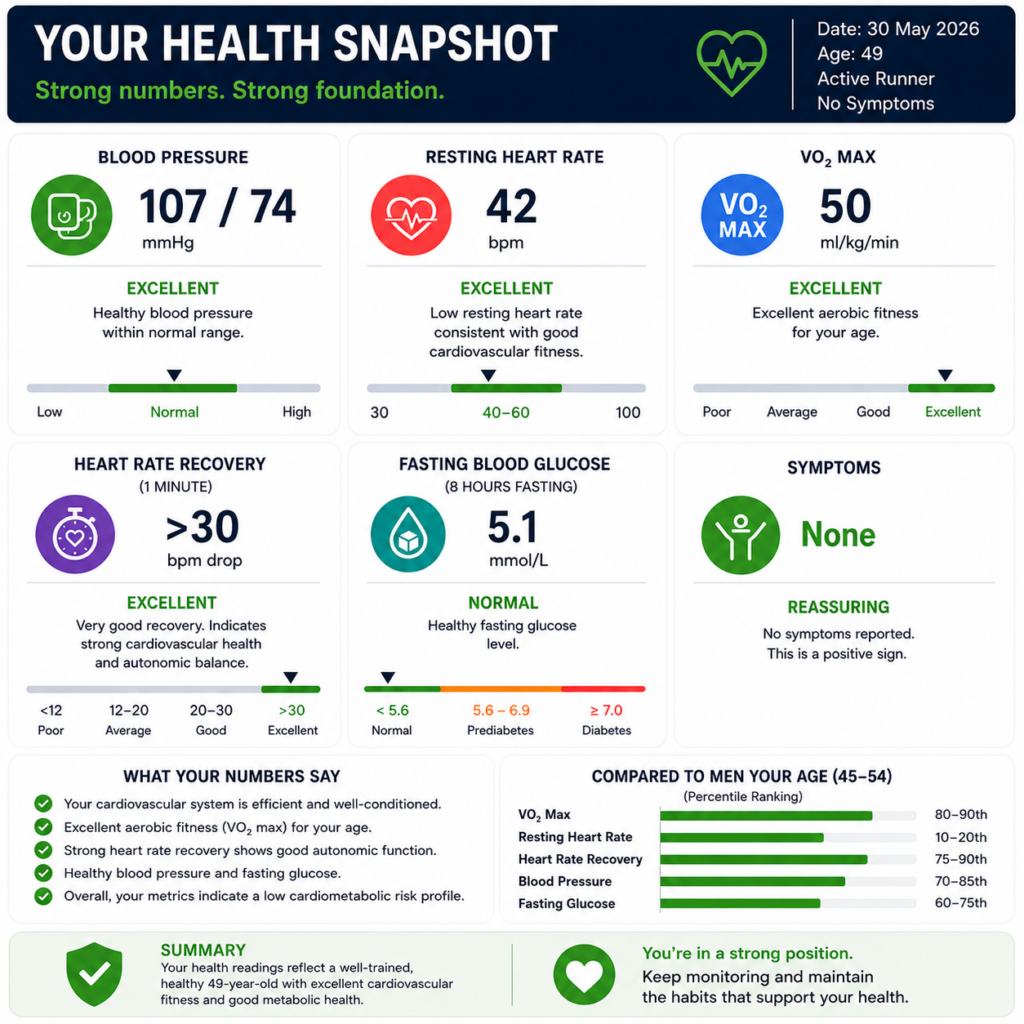
So, I pricked my finger, took my readings, and added the VO2 Max and resting heart rate readings from my Garmin Forerunner watch. I also measured my heart rate recovery (HRR) number after my jog yesterday (Measure with your smartwatch how fast your heart rate drops within one minute of completing an exercise).
I fed ChatGPT my health data and it gave me a reasonable diagnosis and advice. I know its advice to be sound because I have been studying exercise and nutrition since 2012. I then asked ChatGPT for an infographic and it came up with this clean visual which will make a good template for future readings.
Last week, I had an ultrasound done for my bladder, prostate and kidneys, and fed the results to ChatGPT yesterday. Its feedback was pretty much the same as the human doctor at Woodlands Hospital.
All that said, I think it’s still critical to see the human doctor first and always ensure we have clean and correct data. While blood pressure and blood glucose measurements are now easily done at home, and smartwatches collect a lot of heart rate data, we still need to visit the doc to get ultrasound scans and urine tests done.
Gen AI needs good data to work with, and in turn, we humans need to know how to collect data well, whether it’s for our health or for work. So while ChatGPT is a decent health advisor, make sure you collect your health data properly.