
In this week’s newsletter, I ponder on the monetary value of graphic icons vs a custard puff. I also recap what I wrote about Google’s latest integration of NotebookLM into Gemini, how NTU and Google are collaborating on AI literacy, my cheatsheet on Gen AI apps, my warm critique of a BBC aircon headline, a note to Christians and how not to do a presentation.
Yesterday, I was building a deck to teach advanced Canva techniques and I needed some graphic icons for a hands-on design exercise. Whether you search within Canva or on stock image websites, you will get overwhelmed by the sheer volume and variety of icons.
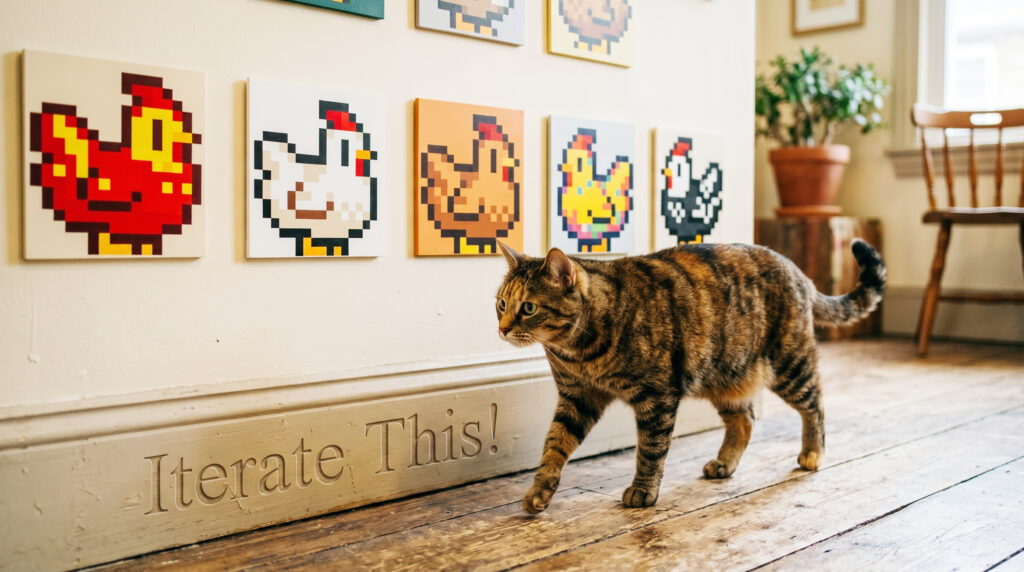
For example, Freepik has 328 free icons just for “chicken”:
Pasted image 20260412080334.png
It got me thinking: How many hours did a designer spend to create an icon set, only to have his work given away for free? You might think: “Icons are easy to design” but that’s not true. It takes aesthetic sense and discipline to design icons that work for different display sizes.
Then, I thought about the custard puff I bought recently from Polar. It cost S$2.20 and is consumed in a few minutes, yet I was willing to pay for it. The people who stuffed the custard into the pastry and put it into the oven will never be named, but someone was willing to pay for their few minutes of work per puff. (Image from Polar)
Pasted image 20260412080952.png
Why do we pay instantly for something we consume in minutes, but hesitate to pay for work that took hours to create?
Gen AI hit the creative class early and has reduced job opportunities for many designers and writers. But even before Gen AI arrived, we could see that much of the content they created (such as graphic icons or filler stories) had low to zero monetisation.
Yet the public would still pay for generic snacks and drinks that satisfied their physical hunger. A S$2.20 puff was valued correctly IMO, but why does one pay S$6.00 for an Americano brewed by a coffee machine at a cafe? I guess people understand that there are ingredients and manpower to pay for, and there’s the cafe ambience and airconditioning, so they fork over the money.
Therein lies the danger of being a “knowledge worker”. If your work is fully digital in nature, it may be considered valuable today, but it will be easily replicated by AI (if not already). You may have spent many hours in front of the screen for each piece of work, but will people be willing to pay for your effort in the near future?
AI stuff I wrote about
Google finally integrates NotebookLM with the Gemini app. Most people have no idea how much this propels Gemini to the front of consumer Gen AI apps.
That’s why it’s no surprise to me that NTU is going all in with Google’s AI ecosystem.
My updated cheat sheet on which Gen AI apps I use and teach in my workshops. It’s got a few typos, sorry!
I do a personal mini-hackathon before each Gen AI workshop that I conduct for organisations. I make sure I can help to solve their actual pain points.
A coffee session with OpenAI to discuss how I implement AI in my teaching, and how I teach other teachers to do so.
Other stuff I wrote about
BBC says that Singaporeans are addicted to air-con. It’s more of an inability to set the thermostat correctly.
I sighed when I saw many Easter greetings missing the point. So I wrote this for my fellow Christians.
“Good and evil both increase at compound interest” – CS Lewis.
Don’t present to your phone during a presentation.
My wife and I celebrated our 24th wedding anniversary! For some reason, this was my most popular post of the week.