
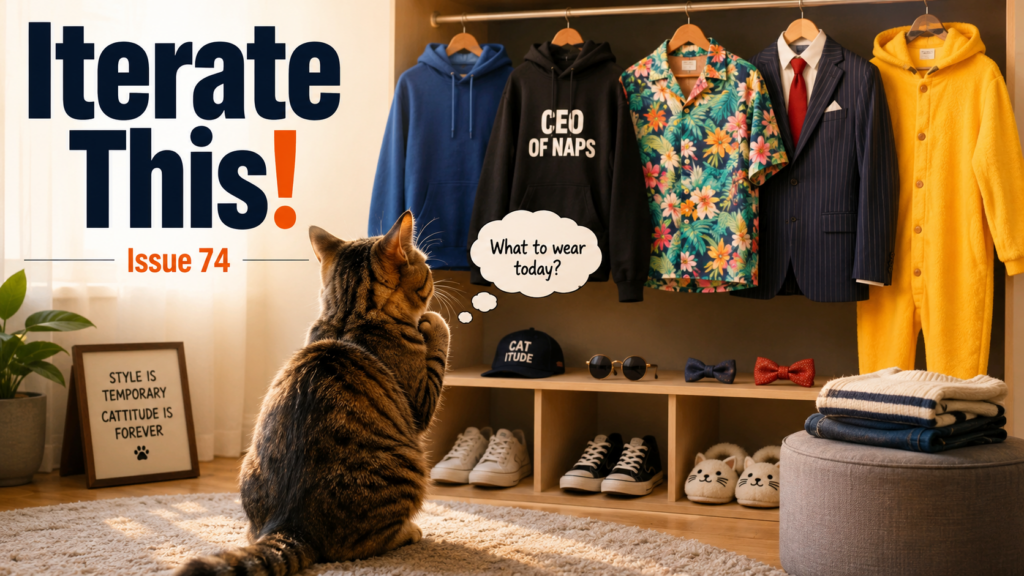
This week, I wrote an essay about why, in the words of Dolly Parton, we need to “find out who we are and do it on purpose”. Before that, a recap of what I wrote this week about ChatGPT data charts, the inevitable Apple price hikes, the two a16z founders on the new media, and the Gallup report saying that almost everyone in Singapore is disengaged from their work.
Photo of the week

Lornie Road, 22 June 2026, Singapore.
The Weekly Recap
ChatGPT has gotten really good at making data charts, and here’s what I generated for a Chinese audience.
If there’s one objective reason to hate Gen AI, it’s the awful price increases in electronics that we are facing now. Windows laptop makers raised their prices since the beginning of the year, and Apple has finally done it. Confession: That’s why I bought my MacBook Air even though I’m still a Windows fan. I saved $500 in advance.
I really enjoyed listening to this panel discussion featuring the bosses of Andreessen Horowitz about how you should engage with the new media (ie. today’s media) vs the old media.
Gallup says that only 10% of young SG workers are engaged in their work. That’s great for go-getters.
Here’s the world’s most hardcore presenter remote – the Logitech Spotlight 2.
As I expected, the Supergirl movie is doing badly at the box office. It’s really because of the awful marketing. Spider-Man doesn’t seem to have issues wowing the crowd.
Interesting LinkedIn data on the most versatile college majors.
I like to find out what prompts people use to generate useless LinkedIn comments.
Sunday Essay
There are several modes of Ian Yong Hoe Tan and I hope you never get to meet “Damage Control Ian”.
This mode is rarely switched on and only during emergency situations (eg. a comms crisis in a company), and I intensely focus on solving the problem until it is done. I will not crack jokes, I will gather to me only the people who can contribute, and I set tough deadlines. My jaw hardens, my eyebrows move less, and there is no tolerance for incompetence, whether it’s mine or others.
Thankfully, most of the time, you’ll encounter “Walking Ian”, “Lecturer Ian”, “Train-Taking Ian”, or “Media Ian”. Each mode is similar, except that there are different filters in place. Lecturer Ian has many anecdotes to share but is careful not to offend the sensitivities of the audience. Train-Taking Ian is listening to music and observing other people, thinking about the lives they lead. Walking Ian is often deep in thought while he sees the world through photographic frames. Media Ian is the public version of me – there are many mental guardrails in place so I don’t get into trouble during media interviews, and I always dress up.
I have this clarity about my different modes because I know who I am. I love this quote from Dolly Parton:
“Find out who you are and do it on purpose”
Throughout our lives, people tell us how to live our lives, how we should behave, what we should strive for. It can be good advice or it can be the output of a fixed mindset. It’s hard to tell when you are young. I have listened, experimented, and learned from all the things that people told me I should do and that I should be. It takes years to get it right (figuring out yourself), but I think I’ve reached the age where I’ve largely gotten it right, and I can even describe my different modes (aka personas) to you.
This clarity of self is important because you need to know what to show others in different scenarios. You don’t want to be Pyjamas Joe when you need to be Corporate Joe in the boardroom. Not because you aren’t true to yourself, but you must realise that other people cannot take you seriously in your pyjamas, and you are telling them that you disregard their sense of propriety.
What I’ve written so far is basically self-management in practice, and this becomes super critical in the AI age.
As I’ve said before, AI magnifies who we are. If we are lazy, we will quickly offload our thinking to AI. If we are motivated and curious, we will use AI to accelerate our learning and achieve more. What about our personalities and personas?
If our self is a false construct built upon the whims, middling standards, and insecurities of other people, then our use of AI will reflect that – the output will be generic and predictable. If we have personal agency and willpower, we will use AI to tell people something of impact because we are clear about who we are, what we are trying to do here, and what change we want to bring about. Our words will have a unique flavour that is tasty to our target audience.
In other words, I believe that if you willingly create and share AI slop, you probably don’t have much personal agency to begin with. If you don’t want to be associated with AI slop, know yourself, know the audience, and show yourself. Well, the version that you have decided to show!