
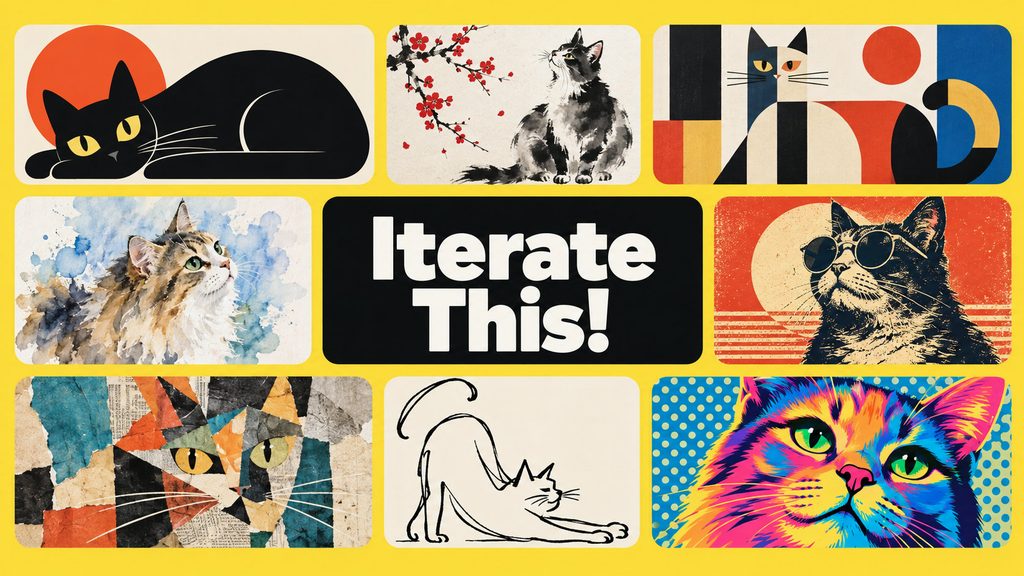
In this week’s newsletter: My Sunday essay analyses the heated LinkedIn comments on the supposed dearth of hybrid talent in the fintech sector. The weekly recap covers the most difficult thing to teach in AI literacy, the many ways to solve problems with AI, experiments in social media visuals, “what to study now”, and figuring out the odds that my car would be damaged twice in a fortnight.
Weekly Recap
The most difficult thing to teach in AI literacy.
Then, people have to figure out the many ways to solve problems when using AI.
More experiments in getting AI to design social media visuals to accompany my writing.
A great quote from Kai-Fu Lee on “what to study now?” in the AI Age.
What are the probabilities that I would get involved in two car accidents within two weeks in August? When my car was at a total stop? A question for ChatGPT!
I brought my NTU undergrads to the shopping mall to help them develop a thick skin.
I hope this data storytelling book is still on sale when you read this.
A lunchtime encounter at the CBD.
How I removed 1.1kg of fat in 4 months.
I won’t miss Marina Square when it’s demolished next year, but I sure had good memories there.
A romantic T-shirt from Pinduoduo, $6 only!
Sunday Essay
The most popular post of the week was my sharing of the Business Times’ article about Singapore fintechs lamenting the lack of talent with both finance and tech skills. At time of writing, there are over 70 comments.
To be honest, I disagreed with many comments, but I refrained from responding as I realised I have my own beliefs, experience and biases. The way some people commented also makes it hard to be sympathetic to their views.
Anyway, this is where AI comes in useful. I got ChatGPT to analyse the comments:
Hiring and matching failure: About 30% said employers demand an exact CV match, while keyword screens and rigid processes filter out people with adjacent or cross-functional experience. About 23% also disputed that hybrid talent is truly scarce, saying qualified people already exist but cannot get interviews or meaningful roles.
Unrealistic “unicorn” expectations: About 17% argued that firms want deep expertise in finance, regulation, AI, engineering and operations in one person. They saw this as an overly broad role definition rather than a genuine supply problem.
Pay and budget mismatch: About 17% said hybrid talent commands a premium, but employers want rare capabilities while offering ordinary salaries or low recruitment budgets. A few also cited age bias and demanding work expectations as deterrents.
Build rather than buy: About 18% urged firms to develop talent through rotations, mentoring and applied training. Internships may strengthen the future pipeline, but they do not solve today’s experienced-hire gap.
A genuine structural gap: About 8% agreed that finance, regulation and technology now overlap in ways that require people who can translate across all three fields. Another 8% traced the shortage to Singapore’s long-standing emphasis on narrow specialisation, which has undervalued people who move between disciplines.
OK, now I can agree with most of the comments, once the emotions and communication styles have been stripped out by the machine.
My personal view? I think recruiters or hiring managers are a root problem. I know a few great HR people, but like in any industry, these are the rare elite. You and I know that many people in most professions treat their work as transactional. They are focused on ticking checkboxes or completing the paperwork. This makes them highly vulnerable to displacement by either better people, workflows or technology (hello, AI). And obviously, they would miss the talent right under their noses.
The other root problem is when some people don’t believe it’s possible to be good in two fields of work, or that a job should not demand the same. This is a head-scratcher, because since I started working in 1998 as an intern, I’ve had to master multiple skills in each job role. As a photojournalist, I had to master the technical and aesthetic aspects of photography, interpersonal communication and writing for the public. Later in the IT industry, I had to do P&L spreadsheets, do product forecasting with distributors, manage social media, launch marketing campaigns, and do hardcore product demos to the media – all within the same week.
But I never complained, because doing these things well made me happy, and most importantly, kept me employed. So I sought to keep learning and improving the outcomes in each area.
To close, we should be practical while ambitious. Yes, we cannot expect a person to know everything, but we should also keep pushing ourselves to get out of our comfort zones. For working pros, it’s about constantly expanding our capabilities. For HR and hiring managers, it’s about looking for hybrid talent in new spaces and giving existing staff ample opportunities to become such talent.